Introduction
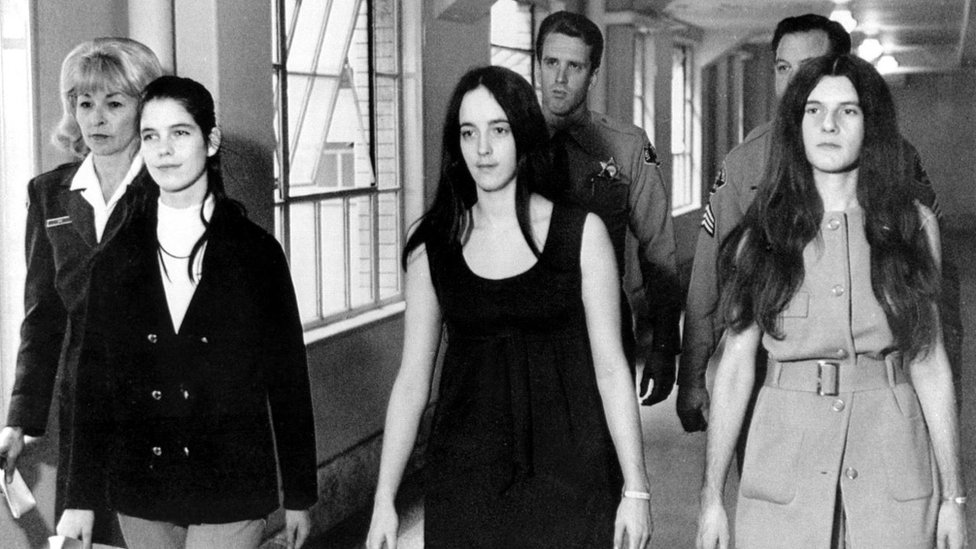
Back in 1971, in Los Angeles, California, seven murders were committed in the first-degree. Charles Manson, a known cult leader, was charged for these seven counts of murder, as well as one count of conspiracy to commit homicide (Roy et al., 2022) The victims were 8.5-month-pregnant actress Sharon Tate, Jay Sebring, Abigail Folger, Wojciech Frykowski, Steven Parent, and Leno and Rosemary LaBianca (Roy et al., 2022). However, despite being charged for these crimes, Manson didn’t even pick up a knife. Instead, he commissioned his cult followers hyped up on LSD and bizarre rhetoric to commit his fantasy of murdering Hollywood for him. Charles “Tex” Watson, Susan Atkins, Patricia Krenwinkel, and Linda Kasabian actually committed the murders, and were also charged for their acts of violence. In this case, Manson’s fan girls became the convicts themselves, passing the threshold of total obsession into total assimilation.
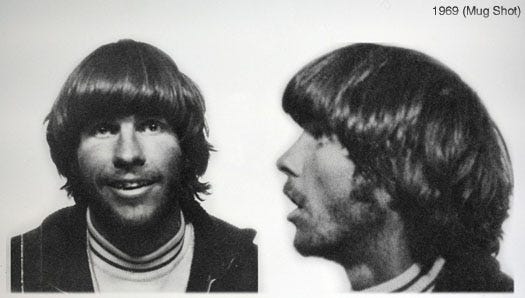
Based on the case above, there is no doubt that the extremity of fan girls, cults, and fandoms seeps into the true crime world. However, unlike the Manson family murders, many of these new serial killer junkies have become fans without even having contact with these killers. Online members of the true crime community (TCC) and everyday Reddit users have become infatuated with cold blooded killers – to the point of falling in love with them. In fact, there’s now a word for it. According to researchers Chloe de Oliveira and Juan-Pablo Robledo,”Hybristophilia refers to a romantic and/or sexual attraction to individuals who have committed “criminal acts” (2025, p.1). True crime researcher Fathallah highlights that “This is the self-professed serial killer fan: girls who profess their love for Ted Bundy and Jeffrey Dahmer…” (2022, p.5640). But regardless of definition, the question still remains: how does one fall in love with a serial killer, let alone one they have never met in real life? In today’s post we will first breakdown the parts and examples of hybristophilia, and then analyze why it occurs through a parasocial, mediated-communication lens.
What is Hybristophilia?
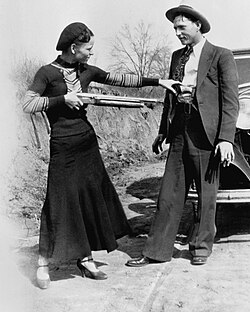
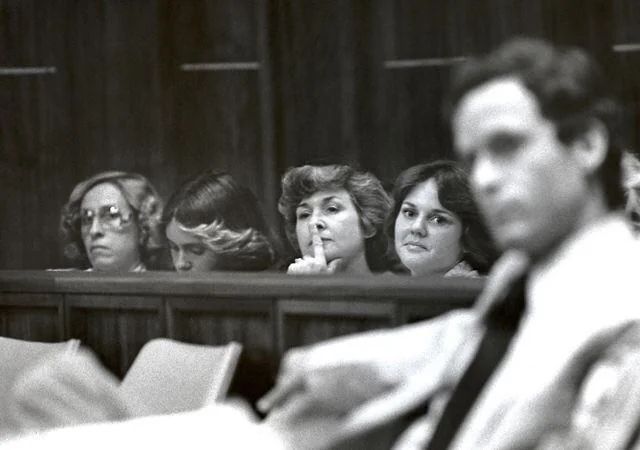
As stated previously, hybristophilia refers to someone being sexually or romantically attracted to a criminal. There are two classifications of hybristophilia, passive or aggressive. Passive hybristophilia refers to both physical and romantic attraction to the image of the criminal (Oliveira & Robledo, 2025). For example, the women who considered serial killer Ted Bundy to be extremely attractive and handsome would qualify for this category. In contrast, aggressive hybristophilia is when a person becomes an accomplice to their criminal partner by actively participating in assaults and murders (Oliveira & Robledo, 2025). A good example of this would be the true story of criminals Bonnie and Clyde, which is why this portion of hybristophilia is also refered to as “Bonnie and Clyde Syndrome”. Either way, each type of hybristophilia has the same thing in common: an infatuation with sick-minded murders.
Notably, the term TCC on both Reddit and Tumblr refers almost exclusively to murder and especially to multiple murder, be that serial or spree killing (Fathallah, 2025). Through the lens of the TCC, most of the people who can be defined my hybristophilia are in love with serial killers. The most notable and popularized cases of hybristophilia are Ted Bundy apologists, Richard Ramirez, or the “Nightstalker” fan girls, and the Menendez Brother fandom. However, times have changed. This kind of behavior is less seen through writing letters and attending sentences to prison, and instead is seen through online activity and posting. Through their analysis and study on hybristophilia via Tik Tok videos, researchers Thomas Williams, Harriet Slater, and Camilo Gomez found:
“Content that exhibited this theme was framed to portray the criminal offender as someone who, although an offender of serious crimes, was attractive and a love interest to the content’s author. This was often displayed palpably by the author through methods including presenting the criminal offender surrounded by love hearts, overlaying a provocative song which contained lyrics focused on sexual interactions and/or including provocative captions to the content” (2025, p. 187).
Clearly, the idea of a fandom is still alive, just more twisted. Instead of fandom edits of boy bands like One Direction circa 2014, Generation Z is making Capcut edits of their favorite serial killers. Because times have changed, and media journalism has evolved, discussing killers online has become entirely parasocial – to the point of thinking you’re in love with a criminal.
Why are You in Love with a Criminal? A Communication Analysis
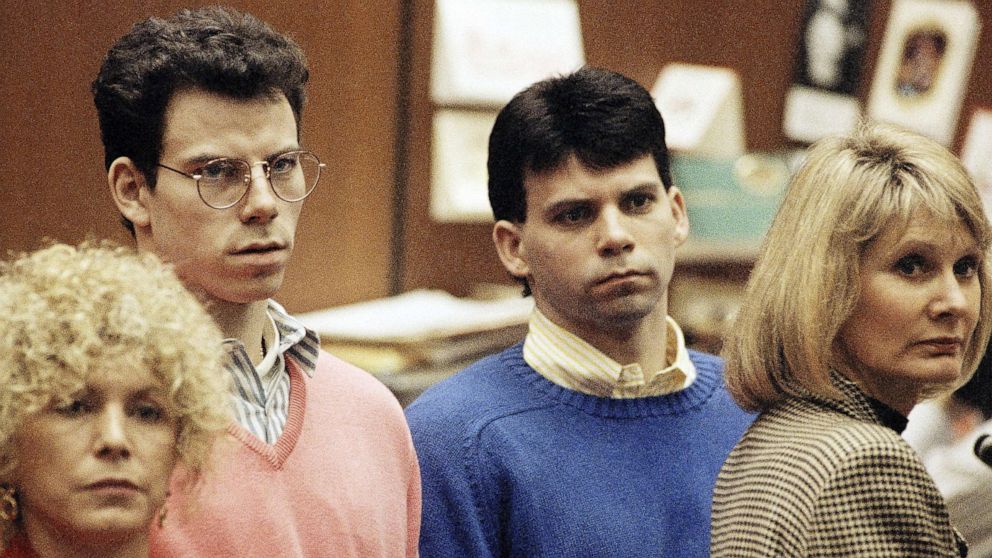
The Menendez Brothers killed their parents back in 1989. In 2026, video editors on Tik Tok are making romantic edits of them.
So, times have changed. And because that, so has the reporting of true crime media. TV shows made of serial killers, as well as in-depth documentaries, have allowed people to look at killers through a glamorized angle. The reinforcement of hybristophilia often comes from these types of media, because films and television series often glamourize portray fictional offenders as empathic or identifiable, resulting in the romanticization and idealization of criminals (Treggia et al., 2025). Besides empathy, the halo effect is often transferred towards these killers when production companies cast attractive actors as leading roles in serial killer productions (Treggia et al., 2025). Thus, the reason that people parasoically attracted to serial killers are for two reasons – fake sexual attraction and unrequired self-disclosure.
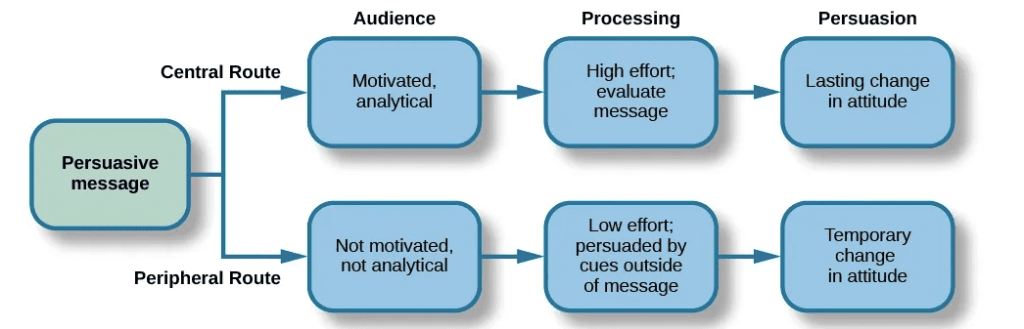
Connecting this to communication theory, the theory of elaboration likelihood model (ELM) possesses an explanation for this phenomenon, particularly with the parasocial nature of serial killer sexual attraction. ELM theory focuses on how people process information to change their attitudes about specific topics (West & Turner, 2021). There are two types of information processing routes, the central route and the peripheral route (West & Turner, 2021). The central route requires logical and high-effort reasonings to change an attitude, while the peripheral route requires low-effort cues to change an attitude (West & Turner, 2021). In the case of being sexually attracted to a serial killer, fan girls take the peripheral route. Instead of using a high-effort way of thinking, such as analyzing how a serial killer causes pain and harm to many families, they instead use a low-effort way of thing, such as favoring a serial killer because of their physical looks. Instead of analyzing the horror a real serial killer causes, the TCC choses to evaluate killers via actors that play them in TV shows. In this case, it’s good to know that most hybristophilia related people can only fantasize about their relationships with killers, as many of the killers they obsess over are on death row. (Pettigrew, 2019).
Being on death row is another reason why so many people are in love with serial killers, due to the fact that there are so many personal interviews with death row inmates, as well as infamous killers. Because of this, journalists share personal information about criminals with the world, allowing hybristophilists to think they are in the process of starting a relationship. Through a communication lens, this is referred to as social penetration theory (SPT). The process of SPT involves two induvial self-disclosing their own personal information with each other to create intimacy (West & Turner, 2021). Because selective serial killers share intimate details hybristophilists parasocially think they can start a relationship with inmates. This can be defined as the parasocial process of SPT, where one side via mediated communication self-discloses, and the other feels connected through watching. Although hybristophilists don’t actually self-disclose themselves, they think through a parasocial lens that the serial killer is sharing details about their life intimately with them. And if the media doesn’t start to highlight these dangerous parasocial practices, passive hybristophilists will soon revery back to the Manson days, becoming fully aggressive with their hybristophilistic nature.
Discussion Questions:
- Have you ever watched a serial killer Tik Tok fan edit? What were the comments on the video like?
- Have you watched a serial killer TV show? What were your thoughts on the actors’ portrayal of the serial killer in the film/TV show?
- Had you ever heard of the term hybristophilia before reading this blog?
References
de Oliveira, C., & Robledo, J.-P. (2025). Hybristophilia as a form of rescuer syndrome. Deviant Behavior, 1–29. https://doi.org/10.1080/01639625.2025.2605168
Fathallah, J. (2022b). “BEING A FANGIRL OF A SERIAL KILLER IS NOT OK”: Gatekeeping Reddit’s True Crime Community. New Media & Society, 26(10). https://doi.org/10.1177/14614448221138768
James, T., Harriet Emily Slater, & Camilo Tamayo Gomez. (2024). Unpacking the construction of online identities of hybristophilia communities on TikTok. Deviant Behavior, 46(2), 1–16. https://doi.org/10.1080/01639625.2024.2338273
Pettigrew, M. (2019). Aggressive hybristophilia in men and the affect of a female serial killer. Journal of Forensic Psychiatry & Psychology, 30(3), 419–428. https://doi-org.lib-proxy.fullerton.edu/10.1080/14789949.2019.1588911
Roy, T. A., Mihura, J. L., Friedman, A. F., Nichols, D. S., & Meloy, J. R. (2022). The last psychological evaluation of Charles Manson: Implications for personality, psychopathology, and ideology. Journal of Threat Assessment and Management, 10(3). https://doi.org/10.1037/tam0000197
Treggia, E. V., Ioannou, M., Calli Tzani, Lester, D., Rogers, L., James, T., Synnott, J., & Drouin, M. (2025). Gen Z Hybristophilia: The role of tiktok in young women’s attraction to deviant men. Deviant Behavior, 1–19. https://doi.org/10.1080/01639625.2025.2520587
West, R., & Turner, L. (2021). Introducing communication theory: analysis and application. McGraw-Hill.
 The Arm Chair Detective