Introduction
In 2021, Gabbi Petito went missing in August, and was found dead a month later, sparking national attention from multiple news outlets and Tik Tok conspiracy theorists. Netflix released a documentary about her death in February of 2025. It has now been listed as number one of the top ten most-watched shows in Netflix history, along with other additional media posted about her case since her murder (Tastenhoye et al., 2025). In similarity to Petito, a woman named Lauren Smith-Fields was found deceased in December of 2021. Her death was initially ruled to be an accidental overdose, but was later opened for criminal investigation after it was discovered investigators didn’t collect sufficient evidence and ignored the fact that Smith had never had a history of drug use (Tastenhoye et al., 2025). However, despite her death being shocking and unlawfully written-off as an overdose, the media didn’t nearly engage with her case as much as Petito’s. Netflix didn’t make a documentary to cover her case, and Tik Tok didn’t seem to spiral with theories surrounding her death. So, what makes these cases so different that one woman gets all coverage and support, and the other still has her family begging for answers from real investigators? Gabbi Petito was a white woman, and Lauren Smith Fields was a black woman.
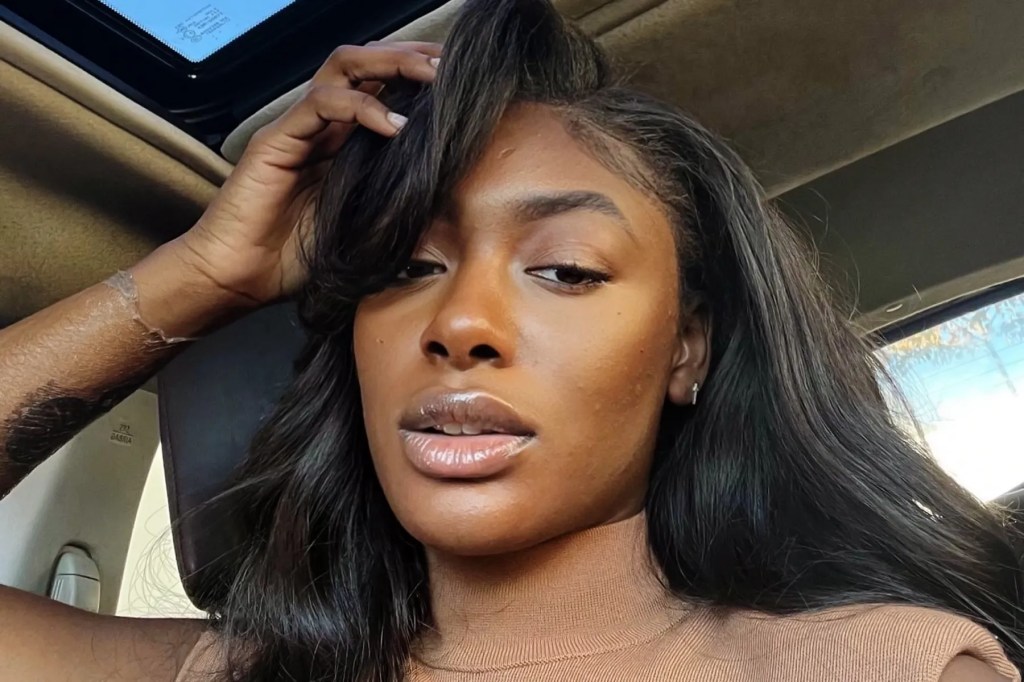
It’s no surprise that racism is still a huge systemic issue in our justice systems. Many bloggers and commenters have pointed out that there are widespread systemic race and gender disparities in the amount of media coverage dedicated to abduction and missing persons cases, coining the media issue as “Missing White Woman Syndrome” (MWWS) (Sommers, 2016). Not only do minorities and people of color face racist structural violence while trying to get justice for murder, but they also get completely ignored by the media for coverage and representation in the true crime community (TCC). Journalists and the TCC seem to only fight for coverage and answers when the victim is white. In today’s post, we will breakdown first what MWWS is, and then analyze it through critical communication theory, to understand why parasocial crime reporting and investigation is deeply rooted in a racist agenda.
What is “Missing White Woman Syndrome”?
According to an analysis conducted by Danielle Slakoff and Destiny Duran, “White women and girls account for about 60% of the women and girls in the United States that comprise a similar number of the women/girls who are missing—approximately 59%. Black girls and women account for about 15% of the women and girls in the United States, but make up nearly 34% of the missing women and girls” (2025, p. 675). Although there are a smaller number of black women in the United States, they still take up a huge portion of female missing persons cases. Adding further, “Native women are murdered at rates more than 10 times the national average, yet Natives only represent 2% of the total population” (Slakoff & Duran, 2025, p. 675). Based on the numbers, clearly the issue isn’t that more white women go missing. In fact, according to a research study conducted by Zach Sommers, stage one of his analysis found that black women are significantly unrepresented in the population of missing persons cases in comparison to the black subset of the FBI population, with a coverage percentage of 9.03% (2016). Clearly, the issue isn’t the minority population numbers – it’s directly tied to who the media picks to converse about.
Sommers also noted in his study that white women have received 49.74% of media coverage through missing persons cases (2016). Through these percentages listed, the concept of the “Missing White Woman Syndrome” came to be. MWWS was coined to use the white female victim to exemplify the phenomenon of case coverage bias in comparison to people of color, or even a male victim (O’Farrell, 2025). In simpler terms, MWWS criticizes the gendered and racist structure of media case bias. The TCC, and journalists further this bias with the use of framing when reporting on cases. Framing in the news often involves picking and selecting some facets of issues, connecting these parts, and then interpreting the whole picture as such to promote a specific narrative (Gilbert, 2023). For example, the cases of Petito and Smith-Fields both started as missing persons cases. However, the media coverage surrounding Petito painted her death as extremely traumatizing and heartbreaking, while Smith-Fields was written off in many articles as an accidental overdose. Petito’s case was researched, theorized, and updated in real-time, while Smith-Fields’s case wasn’t even covered when she was found murdered. The way that the TCC and the media framed both cases, before even reporting on them, shaped the public’s interest for finding justice for both women. MWWS puts this framing into words. Journalists frame cases in their heads based on racist views and biased reporting, putting one case as more urgent than the other. In the case of Smith-Fields, her death was ignored by reporters because she was black.
Analyzing MWWS Through a Critical Communication Lens
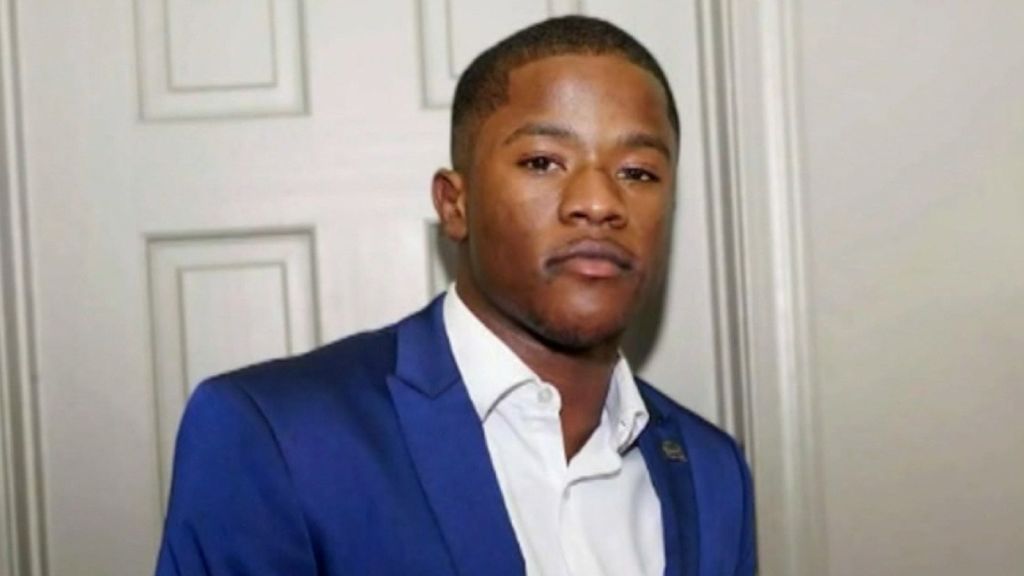
The foundation of MWWS comes from the standpoints of critical race theory. But diving further, the issue of black female victims being less represented in true crime media is much more intersectional. Created by Patricia Hill Collins, black feminist standpoint theory (BFS) explores the vast intersectional landscape of feminist theory. One of the points BFS argues is that when someone is an outsider in a majority group, they can detect racism and sexism that people who are only insiders would miss (West & Turner, 2021). Because black women have a more complex systemic issue with being both black and female, they are able to detect when people contribute to a racist narrative (West & Turner, 2021). Connecting this back to MWWS, black women and people of color who engage with True Crime Media were able to notice the patterns of biased reporting. Even though women are being reported on, given time on live air, and discussed online, the intersectional issue of racial representation is there. The reason that many people of color are able to call out racial disparity in these spaces is because they notice how they are not a part of the majority being covered, even though they are still women themselves.
Besides BFS, one can also look through the lens of white privilege in the United States to understand why MWWS is so prominent in mainstream crime media. African American critical theory points out that white privilege is the myriad of social advantages and benefits that come with being a member of the dominant race (Tyson, 2015). Because of their whiteness, white women are reported on more in crime media, and thus, more favored. Slakoff and Duran argue that “When we continue to see missing White women and girls centered in so much media, consumers may understand this to mean that only White missing women/girls are deserving of this extra attention” (2025, p.687). This is the definition of white privilege, through the lens of true crime media. White privilege is a form of racism because the whole notion of privilege rests on the concept of disadvantage (Tyson, 2015). A disadvantage is always going to be present for black female victims of crime, because there is no pressure from the media to get their cases solved. White women are advocated for through these types of media, whether it’s exploitative or not, for the purpose of finding justice for co-victims. And because of this privilege, many cases involving the disappearances and murders of black women go unsolved – because there is no pressure from the media to solve the case. Black women can’t get justice or rest at peace, because they are black.
Discussion Questions:
- Did you hear about the Smith-Fields case before reading this blog post? If so, which news or media outlet did you read it from?
- This blog post only scratches the surface of the intersectional issues of true crime media coverage. I encourage you to look up the FBI population sublet for missing persons. Have you heard about any of the people on those lists, that aren’t white, in true crime media coverage?
- Do you believe massive media coverage helps solves cases faster?
References
Gilbert, D. (2023). The Oxygen of Publicity: Explaining U.S. Media Coverage of International Kidnapping. Studies in Conflict & Terrorism, 46(5), 618–639. https://doi-org.lib-proxy.fullerton.edu/10.1080/1057610X.2020.1792723
O’Farrell, K. (2025). Discursive (de)legitimation of media bias in news reporting of high-profile crimes: The case of missing white woman syndrome. Discourse, Context & Media, 64, 100851. https://doi.org/10.1016/j.dcm.2024.100851
Slakoff, D. C., & Duran, D. (2025). A New Media Frontier, or More of the Same? A Descriptive Analysis of the “Missing White Woman Syndrome” in Top True Crime Podcasts. Race and Justice, 15(4), 674-696.
Sommers, Z. (2016). Missing White Woman Syndrome: An Empirical Analysis of Race and Gender Disparities in Online News Coverage of Missing Persons. Journal of Criminal Law & Criminology, 106(2), 275–314.
Tastenhoye, C. A., Hatters, S., Ross, N. E., Sorrentino, R., & Kruse, K. (2025, March 12). Missing White Woman Syndrome: Psychiatrists and Societal Bias. Psychiatric Times. https://www.psychiatrictimes.com/view/missing-white-woman-syndrome-psychiatrists-and-societal-bias
Tyson, Lois. Critical theory today. Routledge, 10 Sept. 2015.
West, R., & Turner, L. (2021). Introducing communication theory: Analysis and application. McGraw-Hill.
 The Arm Chair Detective