Introduction
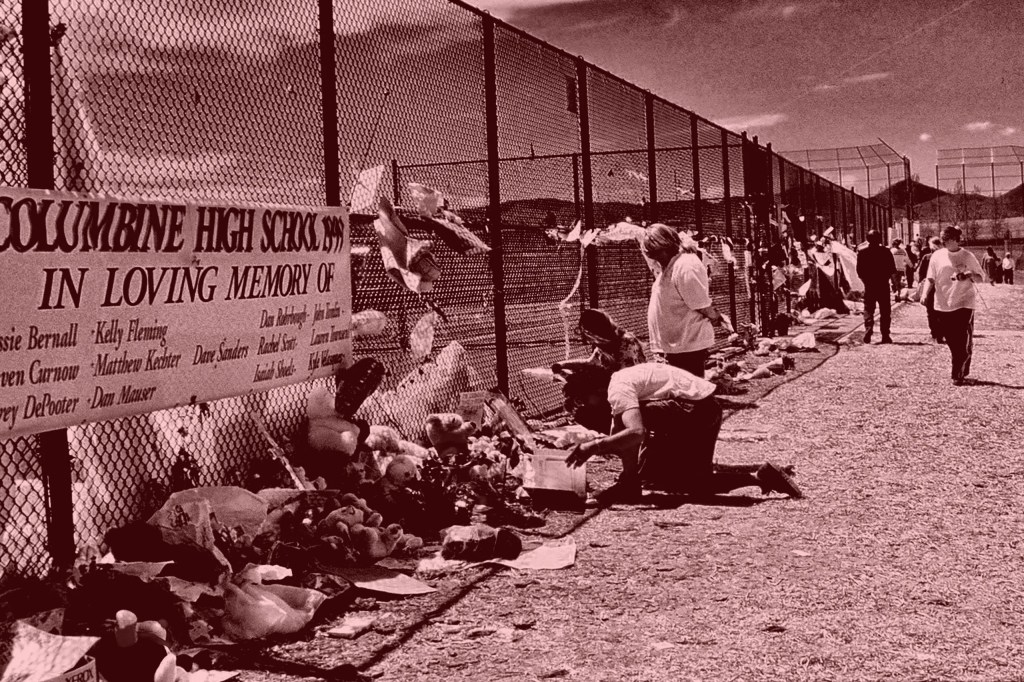
The names Cassie Bernall, Steven Curnow, Corey DePooter, Kelly Fleming, Matthew Kechter, Daniel Rohrbough, William “Dave” Sanders, Rachel Scott, Isaiah Shoels, John Tomlin, Lauren Townsend, and Kyle Velasquez are all names the true crime community (TCC) should be familiar with. After all, the TCC spends countless hours reviewing, analyzing, and criticizing the deaths of these innocent people, either on sites like Reddit or Tik Tok. However, the people discussing these violent murders have a different name than the TCC, as they coin themselves the “Columbiners” (Cullen, 2025). If you still haven’t picked it up by now, all of the names listed previously were victims of the 1999 Columbine school shooting. Thirteen lives were tragically lost, but weirdly, only two lives are remembered in “Columbiner” conversations – Eric Harris and Dylan Kelbold. They both died by suicide after murdering the thirteen people that “Columbiners” can’t seem to remember.
The Columbine school shooting changed the way America viewed school shooters. The witch hunt for mass killers shifted after April 20th, 1999 into a more macabre fascination of understanding the criminal mind. But it goes way deeper beyond interest in brain chemistry. David Cullen, the first journalist and author on Columbine, stated that after 10 years had passed, people began shifting from their interest of the criminal mind, and instead created a fandom for the Columbine shooters, praising their “work” (2025). It seems school shooters have become the new celebrity in the TCC world. And after their slaughter of innocent children, teachers, daughters, sons, and themselves, their rotten legacy sticks around to haunt all victims through mediated communication and public captivation. And, so, schools must take monies from their educational funds and put them towards physical barriers and hiring security officers (Bates, 2024). Through a communication lens, today’s post will discuss the two media phenomenon’s that occur after a school shooting in America: the creation of a school shooter’s morbid legacy, and the effect said legacy has on the view and the lives of school shooting victims.
The Publication of School Shooter Manifestos: The Columbine Effect
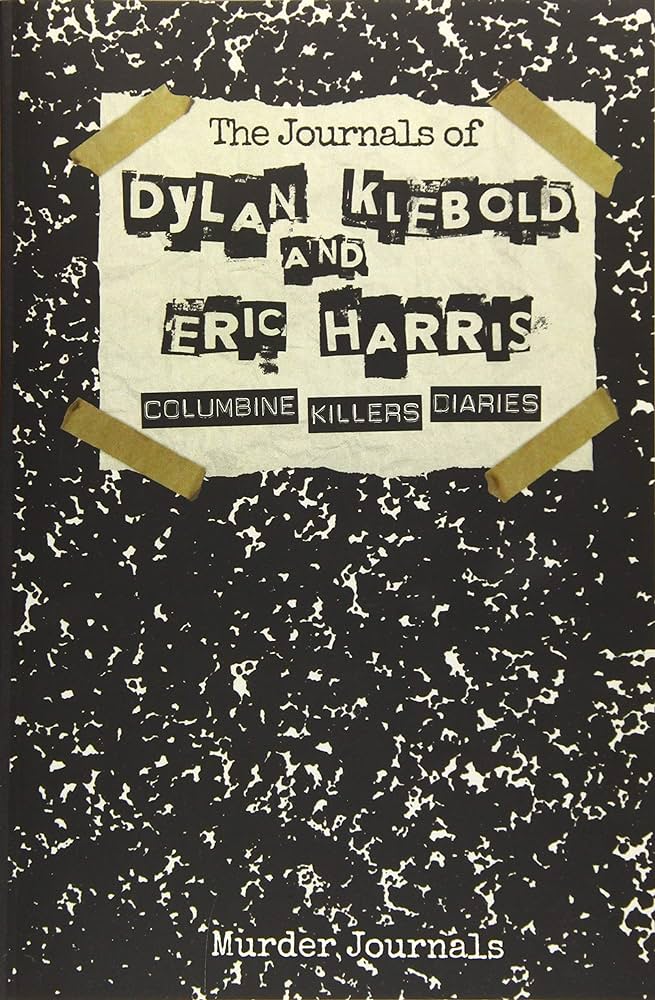
After the documented and very public coverage of the Columbine shooting, came the publication of the shooters’ manifestos. Their private journals, home videos, and even school assignments became readable online, glamorizing their sick minds into becoming extremely accessible, as well as memorable. New York post writer and journalist Malcom Gladwell pointed out that with the publication of the Columbine shooters’ violent ideas, writings, outfit choices and school shooting schedule became a cultural script of how to become a school shooter (2015). In fact, out of the twelve major school massacres that happened after Columbine, eight of the shooters at these schools made explicit references to the Columbine shooters (Gladwell, 2015). Mediated communication and online publication has now become the easiest way to give you steps on how to become a school shooter, or at least, how to idolize one.
However, idolizing a serial killer is something that didn’t just spawn through mediated communication advancements and new true crime opinions. Created by Elisabeth Noelle-Neumann, the communication theory spiral of silence theorizes that people often withhold their opinions if they feel that they are a part of the minority, with the intent to avoid total social isolation (West & Turner, 2021). Typically, most people would grieve, send coldolences, and give families the respect they deserve in times of massacre, which is the general response. But the TCC and “Columbiners” don’t care if they are socially isolated with their interest in the details of each moment in a serial killer’s life. They vow to stay a “fan” of what they consider champions – when in reality, the Columbine shooters’ “powerful plan” failed at every attempt (Cullen, 2025). “Columbiners” can be refered to as the Hard Core. The Hard Core, according to Neumann, remains at the end of a spiral of silence process in which they act in defiance over threats of isolation (West & Turner, 2021). “Columbiners” are the outcast. What’s even more funny is that they know almost nothing about the murders they are “in love” with, and instead keep repeating and misreporting the same information that was debunked decades ago (Cullen, 2015). The sad reality is, these people online think it’s cool and rebellious to play the devil’s advocate and agree with a murderer. School shooter fans feed off of the ability to be different, leaving an ugly, misinformed, and insensitive legacy of school shooters behind. And with hot takes, media consumptions, and quick journalism at our fingertips, it has become so easy to people drag out school shooters’ legacies, which spawn an array of copy-cat killers and ultimately leave victims’ families with lives full of trauma and conspiracy.
The Life-Long Aftermath of School Shootings: The Sandy Hook Conspiracy
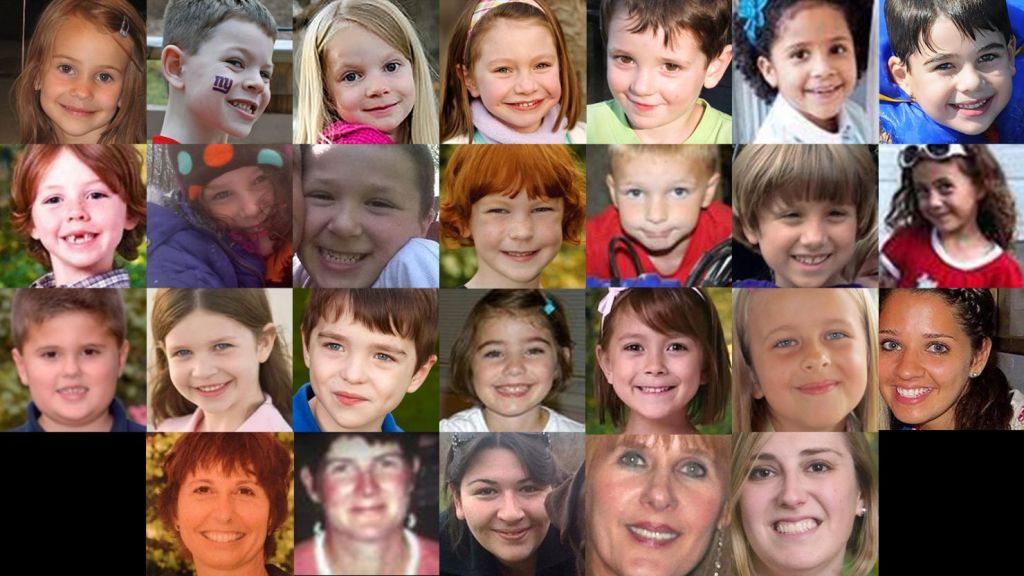
The Columbine shooters legacy has carried on, in the form of other school shooters and conspiracy theories. “On December 14, 2012, Adam Lanza entered Sandy Hook Elementary School in Newtown, Connecticut, and opened fire. Before taking his own life, Lanza shot and killed 20 first-grade students and six educators, including the school’s principal” (Muschert & Schildkraut, 2014, p.23). Similar to the Columbine shooters, the Sandy Hook shooter took his own life after killing and injuring children. However, the legacy that the Sandy Hook shooter left was far greater than a manifesto. The media and online discourse decided to turn this tragedy into a government conspiracy, claiming it never happened.
Alex Jones, a right-wing American conspiracy theorist, crossed the school shooting discussion line when he suggested and publicized that the Sandy Hook school shooting was a hoax. His theory caught the attention of millions online that agreed with his stance. Megan Kelly, a TV show host, interviewed Jones on June 18th, 2017, where he discussed that the Sandy Hook shooting was a false-flag operation where victims were framed as “crisis-actors” in a plot for stricter gun control (Jurg et al., 2024). This caused massive conversation online, and extreme harm to grieving parents of the Sandy Hook shooting. Parents of the Sandy Hook victims have not only had to grieve the loss of their young children, but also deal with harassment, multiple casing of doxing, and even the desecration of their own children’s graves (Evans, 2022). The story is different, but the idea is the same. “Columbiners” just became members of the Sandy Hook Hoax (SHH) theorists. The only difference this time, is that the SHH community is claiming children were never killed at all. Fortunately, all of these claims have been debunked. Alex Jones is now being sued by the parents of the Sandy Hook victims, and has been ordered to pay $965 million dollars for his false claims (Evans, 2022). However, this aftermath will forever play a part in these co-victims’ lives, as the trauma is still continuing years after the shootings occur.
This new found trauma through media conspiracy and dragged-out conversations comes from the theory of groupthink, but eviler. Researched by Irving Janis, groupthink theory is defined as when group members use their desire for unanimity to override their motivation for all accessible plans of action (West & Turner, 2021). People want to do less of the work and agree with the majority. The spiral of silence theory has the same idea within the media. In the case of Sandy Hook, people prefer the idea of group insulation. Group insulation is when a group is unable to be affected by the outside world and their actions or opinions (West & Turner, 2021). Alex Jones and his followers would rather believe that the school shooting was a hoax, instead of acknowledging with the rest of America that twenty first-graders died at the hands of a Columbine copy-cat shooter. Jones chose to create a massive area for people to just agree that something was completely fake, without listening to victims and doing actual research. They took propaganda as reality and began to blame the victims and their families as the real perpetrators, when the shooter fired assault rifle bullets at six-year-olds.
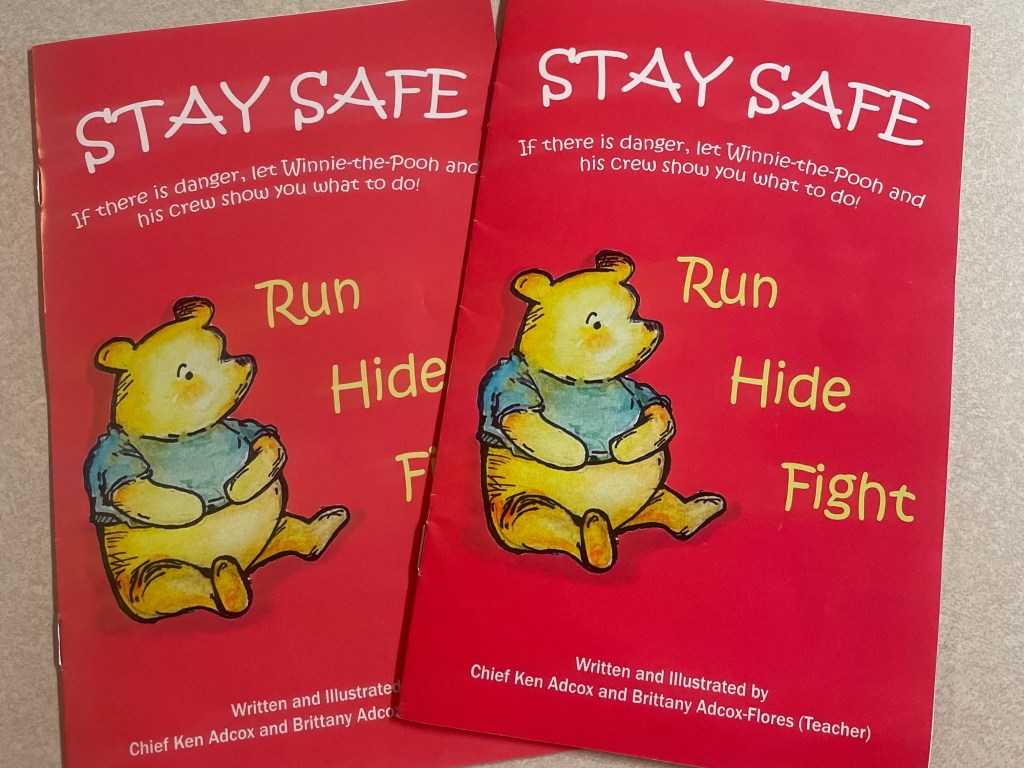
I’ll leave you with this. “Legends are challenging to dismantle, but truth is on our side” (Cullen, 2025). Because of the imprint left by school shooters and conspiracy theories, let me remind you that there are now two parties to blame for the increase in American school shootings: the shooters themselves and the creation of their so-called “legacy” online. The Sandy Hook killer committed suicide. But it’s his cruelty that remains as a haunting reminder of the threshold of violence. “Children, as young as four and five, must now be taught, with the help of their friend Winnie the Pooh: If you see or hear something that is not right, be bright. Do not delay, do this right away. If there is danger, the police will come fast to catch the stranger. Until then, remember what Pooh and his Crew said to do … Run Hide Fight” (Bates, 2024). Because of school shooters, our children have learned violence at the youngest of ages, through Winnie the Pooh. Because of people like the “Columbiners” and the SHH theorists, victims’ families don’t get to remember their children, because people online are discussing the ways in which their death was planned out, through home-made “How to Kill” manuals. In the day of the Columbine shooters, we could try to console ourselves with the idea that there was no law on guns or intervention that could make a difference in the face of evil (Gladwell, 2015). In 2026, I’m not so sure we can stop the online mob from making it even worse.
Discussion Questions
- What ways have you seen the media favor covering school shooters over victims? How is it done almost subliminally?
- I encourage you to look up the lives of the children who passed away in the Sandy Hook shooting. Each child has their own playground in memoriam of their life. How do these memorials reflect the way people viewed Sandy Hook?
- Do you consider Columbine to have set a cultural script for school shootings?
References
Bates, C. M. (2024). There’s Something about Uvalde: American Patriarchy and the Slaughter of Innocents. Journal of Analytical Psychology, 69(2), 227–245. https://doi.org/10.1111/1468-5922.12995
Cullen, D. (2025). Columbine. (4th ed.). Twelve Books.
Evans, G. (2022, October 12). Alex jones told to pay $965m damages to sandy hook victims’ families. BBC News. https://www.bbc.com/news/world-us-canada-63237092
Gladwell, M. (2015, October 19). Thresholds Of Violence. The New Yorker, 91(32), 30. https://link-gale- com.libproxy.fullerton.edu/ apps/doc/A432904074/LitRC?u= csuf_main&sid=bookmark-LitRC&xid=9d992947
Jurg, D., Tuters, M., & Picone, I. (2025). “Alex, DO NOT BACKPEDAL ON SANDY HOOK!”: Reactionary Fandom, Cancel Culture, and the Possibility of ‘Audience Capture’ on YouTube. Television & New Media, 26(1), 58-73.
Schildkraut, J., & Muschert, G. W. (2014). Media Salience and the Framing of Mass Murder in Schools: A Comparison of the Columbine and Sandy Hook Massacres: A Comparison of the Columbine and Sandy Hook Massacres. Homicide Studies, 18(1), 23-43.
West, R., & Turner, L. (2021). Introducing communication theory: Analysis and application. McGraw-Hill.
 The Arm Chair Detective